Contents
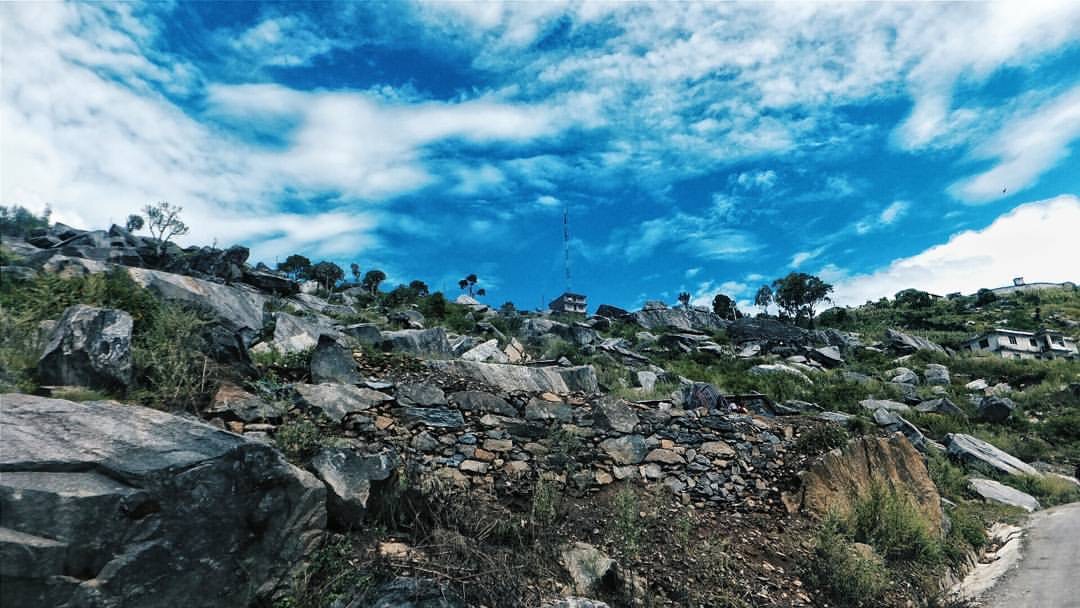
Two documents frame how hill roads are built here: the Nepal Rural Road Standards, which set width, gradient and surface, and the Green Roads method, which describes who digs and how. The wider topic is in the rural roads hub; keeping a road working afterwards is covered in road maintenance groups.
The standards a road is built to
The Nepal Rural Road Standards set the classification and geometric design standards for the Local Road Network, to be followed by everyone involved in building it, from user committees and village committees to district development committees, district technical offices and the Department of Local Infrastructure Development and Agricultural Roads (DoLIDAR)3. They were revised in 2010 while interim guidelines for District Transport Master Plans were prepared for the pilot districts3. Terrain is split into two classes, and the hill class covers mountainous and steep country with a cross slope from 25 to 60 percent and more3.
| Item | What the standards say | Source |
|---|---|---|
| Design horizon | A road is designed for the traffic expected 10 years after completion | 3 |
| Core district road, carriageway | 3.75 m, reducible to 3 m below 100 motorised vehicles a day where traffic is not likely to grow | 3 |
| Surface | Gravel or paved for a core district road; unpaved or gravel for a village road | 3 |
| Hairpin bends | Avoid as far as possible; place on flatter hill slopes; avoid a series on one hill face | 3 |
| Exceptional gradients | Only in very difficult places, over short lengths | 3 |
The core district network is defined as the minimum network that gives maintainable, all-weather access to every village headquarters; roads outside it become village roads3. On hairpins, drainage is part of the design: water from the bend must not cause erosion problems on the slope3.
Choosing the line
The first design decision is where the road goes. The choice between a ridge and a valley road, and between south-facing and north-facing slopes, needs careful evaluation2. Aligning along a ridge, especially with a south-west aspect, helps avoid drainage problems and excess moisture and frost, and uses sunlight to keep the road dry1. Local knowledge helps too: surveys that draw on it follow traditional routes that people already know well1.
The Green Road concept sets itself against a common alternative: uncontrolled and hasty, often mechanised construction by inappropriate bulldozers in a fragile mountain environment, causing massive soil erosion2.
Building by hand
Under the Green Roads approach construction uses manual labour to create off-farm jobs, aims to be low cost, and needs about 12,000 person-days per kilometre1. In a 2000 account a Green Road cost Rs 10-12 lakh per kilometre to build1.
The method is built around local materials:
- Dry stone walls, without cement, fill the roadbed; they are the most common local technique1.
- Retaining structures in dry and gabion walls, stone water management and bioengineering are the key elements2.
- Excavated material is reused as fill through mass-balancing1.
- Shrubs and trees planted along the edges help stabilise earthen banks1.
- The road surface gets a slight outward slope to disperse rainwater and limit gully erosion1.
- Large rock is cracked by heating it with a fire and pouring cold water on it, because blasting causes deep fractures that can lead to large landslides1.
Construction is phased. Widening the track gradually avoids handling large amounts of excavated material and lets monsoon rain compact the earthwork1. Widening is gradual, over three phases2. A farmer in the 2000 account described the order: in the first year a one-metre path is cut and the earth fills low places, then dry walls and check dams are built, and the following years dig out more1. Upgrading is staged too, starting as a single-lane road with a natural surface and growing with traffic and funds2.
Who works, and on what terms
The annual building period is fitted to the local slack season in farming so that people are not pulled from their fields1. Labourers are paid for the amount of work done rather than a fixed daily rate, which gives an incentive to progress quickly1. Women earn from the construction work and are paid the same as men for equal work1. Children under sixteen years of age are not allowed to work on the projects1.
Maintenance continues the same logic: it needs about 200 to 300 person-days per kilometre per year1.
Who decides
In the Green Roads model the people who benefit decide on the project, its alignment, labour management, group formation and the use of resources1. In the Green Road concept, Local Road Coordination Committees and Road Building Groups give preference for off-farm work to local labourers2. a District Technical Office implements the works, with local NGOs or consultants supervising construction2. Disputes go to Local Road Co-ordination Committees1, landowners who give land are compensated indirectly through higher land values1, and public audits publish funds and spending, for example on sign boards2.
In the 2000 account Dadeldhura district was totally inaccessible by vehicle until 1990, over 65% of the resources of the food-for-work programme described went into rural road building, and the district development committee’s first plan was to link all twenty village committees1. The district is described in the Dadeldhura guide. Roads like this are planned district by district: participatory planning builds the consensus needed to prepare the District Transport Master Plan1, explained in district transport master plans.
Jobs and incomes
The Engineers Against Poverty briefing note describes the Rural Access Programme, developed by the UK Department for International Development, as linking poor communities to the national network with low-cost roads4. Between 2001 and 2008 more than 300 km of earth roads were built through mountainous terrain in remote areas, and the briefing note reported a significant increase in the incomes of 12,000 households4. Maintenance work on the road creates further employment4. A wider briefing note finds that using labour in place of equipment can generate up to five times more employment4.
Read next
Road maintenance groups: who keeps Nepal's hill roads open
How Road Maintenance Groups keep Nepal's rural roads in working order: who joins, what the crews repair, how they are paid and how a road is inspected.
Rural roadsDistrict Transport Master Plans: how Nepal plans its rural roads
What a District Transport Master Plan is, why Nepal updated it in 30 districts, the core road network it defines and how municipalities now plan roads.
Rural roadsTrail bridges in Nepal: how many, who builds them, what they change
Nepal's trail bridges explained: a government count of 8,444 against 10,000 plus elsewhere, how they are built, who runs them and what they changed.
Questions travellers ask
How are rural roads built in the hills of Nepal?
In the Green Roads approach, local people build by hand: they cut a path, fill the roadbed with dry stone walls without cement, and widen the road in phases1,2. Construction needs about 12,000 person-days per kilometre1.
How wide is a rural road in Nepal?
The standards give a district core road a 3.75 m carriageway, which can be reduced to 3 m where traffic is under 100 motorised vehicles a day and unlikely to grow3.
Why is blasting avoided on Green Roads?
Blasting is never used because it causes fractures deep in the rocks that later can lead to large landslides1. Workers instead heat a rock face with a fire and pour cold water on it so that it cracks1.
Sources
- Green roads: Building environmentally friendly, low maintenance rural roads through local participation (Klatzel, GTZ Food for Work, 2000) · ICIMOD Library (GTZ Food for Work Nepal) · lib.icimod.org · checked 19 October 2026
- Green Road Concept - Green Roads in Nepal · IRF gTKP (global Transport Knowledge Practice) · gtkp.com · checked 19 October 2026
- Nepal Rural Road Standards (2055), mirrored on DPNet · Department of Local Infrastructure Development and Agricultural Roads (DoLIDAR), Government of Nepal · mail.dpnet.org.np · checked 19 October 2026
- Employment-intensive road construction and poverty alleviation: What is the evidence? (Engineers Against Poverty briefing note) · Engineers Against Poverty · engineersagainstpoverty.org · checked 19 October 2026
Image credits (1)
- Saru gahatraj / Wikimedia Commons · CC BY-SA 4.0 · source

Fees, fares and road conditions change: each note shows the date it was checked. How we check facts · Report an error.