Contents
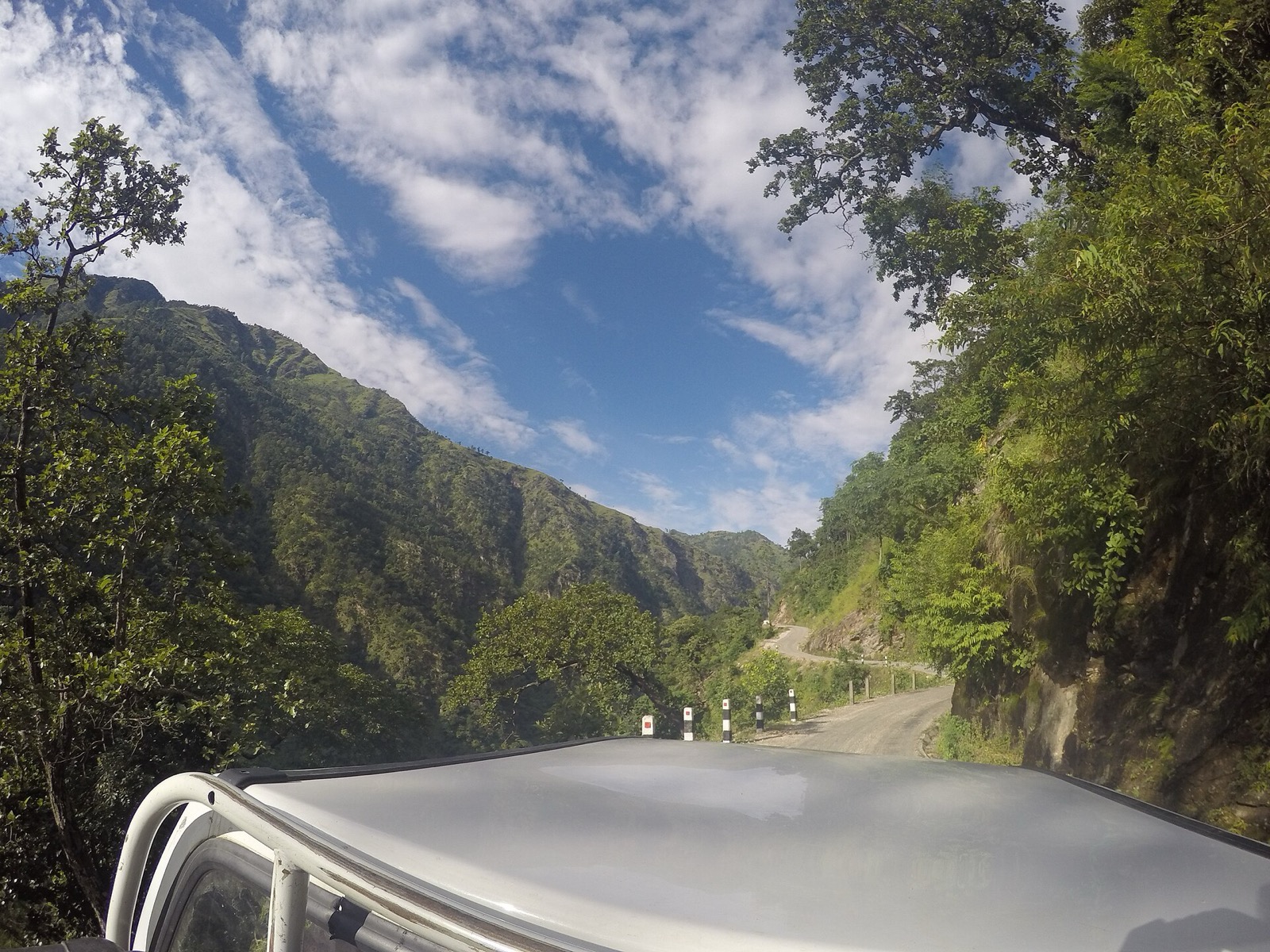
A Road Maintenance Group (RMG) is how Nepal keeps a rural road in working order between big repair jobs: a small crew drawn from the villages beside the road, present all year rather than hired for a season1. This page covers who is in the crews, what they repair and how they are paid and checked. The wider picture is in the rural roads hub, and the building of these roads is in how rural roads are built.
What an RMG is
The District Road Core Network (DRCN) is the set of main rural roads giving access to every village development committee, and its maintenance is the responsibility of the District Development Committee (DDC)4. The March 2016 guideline from the Department of Local Infrastructure Development and Agricultural Roads (DoLIDAR) put the network at about 22,000 km, with a further 5,159 km planned to reach villages without road access1.
RMGs are an efficient and effective means of routine, recurrent and minor specific maintenance of the DRCN, so that the roads stay open year round1. The guideline is a practical guide for the nationwide use of the approach, both under government funding and within rural road projects and programmes1. The figures on this page are the March 2016 guideline’s; a later government guideline dated 2082 BS was a scanned file with no readable text and is not quoted. Its starting point was an International Labour Organization (ILO) conceptual guide, drawn from pilots in Dhanusha and Ramechhap districts in 2008-20091.
Why a group, not a seasonal contract
Damage cannot be prevented unless somebody is there to prevent it, and nobody knows exactly when it will happen, so a more or less continued presence is needed1. Many countries, Nepal among them, have therefore chosen a continuous presence of maintenance workers over contracts at set times of the year1.
On Nepal’s strategic roads each worker is allocated a particular length of road1. On rural roads a variation applies: the workers on one road are grouped and are responsible for it as a group1. The guideline gives three reasons the group form suits rural roads:
- Local authorities tend to lack the human and financial resources a length-worker system needs1.
- Rural roads are generally earthen or gravel, with very localised problem areas that need extra attention1.
- A group can reallocate its members according to need, putting extra time into the more problematic sections1.
What the crews repair
The work is small and mostly unskilled. The guideline lists earthen side drains, repairs to the existing drainage system, removal of banks on shoulders, repairs to dry-stone retaining walls of under 5 m3 per wall and removal of hanging cliff or rocks of under 10 m3 per kilometre of road1. Larger volumes are not the group’s job and are reported to the DDC or the District Technical Office (DTO)1.
A February 2016 World Bank blog describes one worker’s day-to-day: she looked after routine maintenance, cleaned the drains, filled pits, cleared minor blockades and planted trees2. The guideline sets a different standard on a blacktop road, which passes if there are no remarkable potholes larger than 30 x 10 cm that disturb the regular movement of traffic1.
Roads in very poor condition are rehabilitated before an RMG takes them on1. Periodic maintenance of an earthen road includes grading and reshaping of the pavement1.
Who joins and how many
Members are selected from the communities along the road, or those nearest to it1.
| Item | Guideline | Source |
|---|---|---|
| Group size | Ideally 4 to 7 members, exceptions possible | 1 |
| Group size in the World Bank-supported programme | Five to six workers per group | 2 |
| Minimum age | Above 18 years | 1 |
| Women | Preferred, and not less than 33% in any case | 1 |
| Disadvantaged groups | At least 40% of workers | 1 |
| Starting workload, blacktop in good or fair condition | About 65 person-days per km per year | 1 |
| Workload, poor earthen or gravel road with a backlog | Up to about 156 person-days per km per year | 1 |
Selection also targets income: the guideline asks for people who are unemployed or employed less than 25% of their time1.
Pay, plans and inspection
Individual bank accounts are opened for each member’s wages1. The amount paid depends on the inspection results rather than on the number of days worked1. Performance standards have to be met along the entire road length under contract1. Work plans are prepared monthly by the DDC or DTO together with the RMGs1.
The same blog reported that the workers had access to mobile banking, that accidental insurance and free health checkups were guaranteed by the programme, and that for many the job was a first experience of formal employment2.
What it has changed
The February 2016 blog said that, before the World Bank-supported Strengthening National Rural Road Transport Program (SNRTP), routine maintenance on local roads was unheard of except for emergency repair2. In February 2016 the blog reported that roads impassable during the monsoon were now navigable year round2. One worker reported earning up to 11,000 rupees a month for six days of work a week (February 2016 blog)2. One group of 12 men and women looks after a 24 km road from Nuwakot to Malabhanjyang2. The same blog counted about 1,850 workers, mostly women from poor and marginalised communities, in 36 districts, maintaining about 3,300 km of local road2.
An Itad policy brief describes the model as having a dual benefit: jobs for poor community members, and basic works that keep rural roads open all year3. It argues that the Government of Nepal and its development partners should consider continued and expanded use of RMGs in the new federal context3.
How Nepal classifies local roads
The Nepal Rural Road Standards (NRRS) were introduced in 2055 BS to set the classification and geometric design standards for the Local Road Network5. The standards document defines the District Road core network as the minimum network that gives maintainable, all-weather access to all VDC headquarters5. All roads not in the core network become village roads5. The standards divide terrain by cross slope: Terai covers 0 to 25 percent, and Hills 25 to 60 percent and more5. The carriageway of a District Road in the core network is 3.75 m, reducible to 3 m where traffic is under 100 motorised vehicles per day and is not likely to increase5.
A later programme: PLRIP, November 2024
The World Bank’s 21 November 2024 release says the US$128 million Provincial and Local Roads Improvement Programme, equal to NRs 17.15 billion, was launched that day6. Phase 1 combines five-year performance-based maintenance with routine maintenance by self-help groups6. It will maintain 400 km and 700 km of existing provincial roads and bridges6. It will be implemented in Sudurpashchim, Karnali and Madhesh provinces and 13 municipalities, and about one million people are expected to benefit from all-weather roads6. A tri-partite MoU was signed by federal, provincial and local governments for the three provinces6.
For what the rains do to these roads, see monsoon road closures; for the crossings that link them, see trail bridges.
Read next
How rural roads are built in Nepal's hills
How hill roads in Nepal are planned and built: the rural road standards, labour-based Green Roads, dry stone walls, phased widening and who decides.
Rural roadsDistrict Transport Master Plans: how Nepal plans its rural roads
What a District Transport Master Plan is, why Nepal updated it in 30 districts, the core road network it defines and how municipalities now plan roads.
Rural roadsTrail bridges in Nepal: how many, who builds them, what they change
Nepal's trail bridges explained: a government count of 8,444 against 10,000 plus elsewhere, how they are built, who runs them and what they changed.
Questions travellers ask
What is a Road Maintenance Group in Nepal?
A small group of people from the villages beside a rural road who keep it maintained as a group1. The guideline calls RMGs an efficient means of routine, recurrent and minor maintenance that keeps district core roads open year round1.
What size is a Road Maintenance Group?
Ideally 4 to 7 members, with exceptions possible1. A February 2016 World Bank blog on a programme it supports describes five to six workers per group, mobilised by the District Technical Offices2.
Who can join a Road Maintenance Group?
Members must be above 18 years of age and live near the road1. Women are preferred, never fewer than 33% of the workers, and at least 40% must come from disadvantaged groups1.
How are road maintenance group workers paid?
Each member gets an individual bank account for wages1. The amount depends on the inspection results rather than the number of days worked1.
What types of road maintenance are there?
The guideline names routine, recurrent and minor specific maintenance as the work of RMGs1. Periodic maintenance on an earthen road includes grading and reshaping of the pavement1.
What are the different classifications of roads in Nepal?
For local roads, the Nepal Rural Road Standards set the classification and geometric design standards for the Local Road Network5. The District Road core network is the minimum network giving maintainable, all-weather access to all VDC headquarters, and roads outside it are village roads5.
Sources
- Road Maintenance Groups (RMG): Guidelines (DoLIDAR, March 2016), hosted by ILO · International Labour Organization (hosting the DoLIDAR guideline) · ilo.org · checked 19 October 2026
- Rural Nepal women empowered to maintain roads, World Bank blog, February 2016 · World Bank · blogs.worldbank.org · checked 19 October 2026
- The role of Road Maintenance Groups in the Local Roads Network sector in rural Nepal · Itad · itad.com · checked 19 October 2026
- Guideline on Road Maintenance Groups - Nepal · Green Roads for Water (MetaMeta) · roadsforwater.org · checked 19 October 2026
- Nepal Rural Road Standards (2055), mirrored on DPNet · Department of Local Infrastructure Development and Agricultural Roads (DoLIDAR), Government of Nepal · mail.dpnet.org.np · checked 20 October 2026
- Government and World Bank Launch $128 Million Project to Improve Nepal's Provincial and Local Road Network (press release, 21 Nov 2024) · World Bank · worldbank.org · checked 20 October 2026
Photos (1)
- Prabinkhadka, CC BY-SA 4.0

Fees, fares and road conditions change: each note shows the date it was checked. How we check facts · Report an error.