Contents
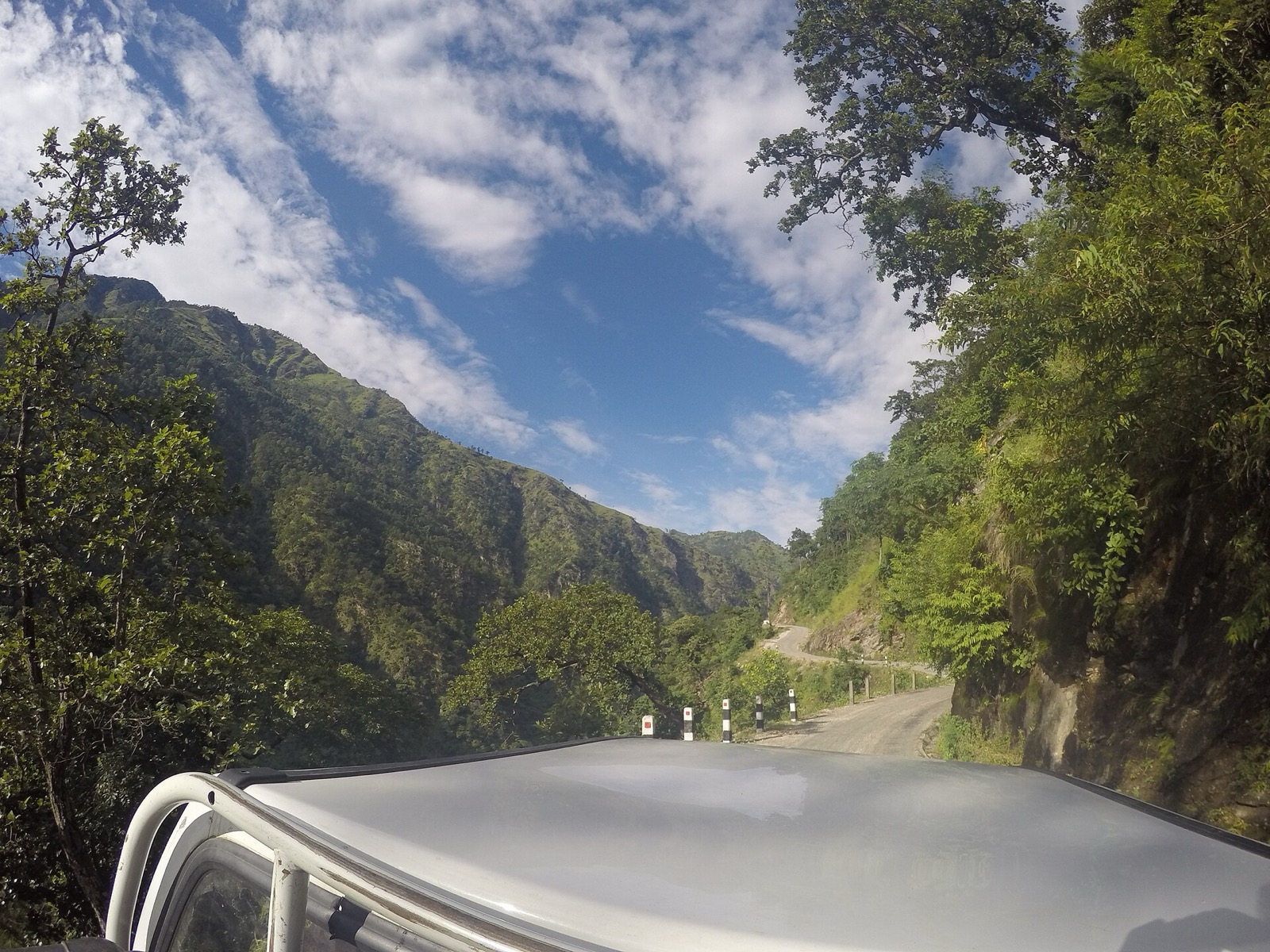
One 2025 study of a Karnali Highway ward recorded changes in markets, work and travel time2, while a study of 200 hill wards found little systematic evidence of economic gains and linked earthen road expansion to landslide-affected area1. The rural roads hub holds the related pages.
The economic evidence
The evidence here comes from one 2026 paper in the journal Asian Development Review (Adhikari et al.), as summarised on Eos’s Landslide Blog by Dave Petley; the paper itself was not read for this page1. It examines the economic benefits of the two main types of rural road in Nepal, blacktop and earthen, across 200 wards in the hilly areas, with little systematic evidence that better road access enhances economic outcomes1. Rural road construction has carried on at a high pace in Nepal for over 20 years1.
In the blog’s summary, earthen roads in the hilly areas generate limited economic benefits but carry a high landslide cost1. Across a wide range of economic indicators, there is no real quantitative data that rural roads are improving the livelihoods of people in remote locations1. The case for these roads rests on access to education, markets, health facilities and jobs, and on direct employment during construction when a participatory approach is used1. Most earlier Nepal-specific studies date from the 1990s to early 2000s, when the country had a very different, primarily agricultural, economy1.
The two road types differ in cost. Blacktop roads are often upgrades on existing roads, so they inflict a much lower environmental cost than new construction1. Earthen roads tend to be new-build1.
The landslide cost
Ward-level estimates showed that the expansion of earthen motorable roads between 2016 and 2018 was associated with a significant increase in landslide-affected areas, whereas blacktop roads exhibited no detectable effect1. The blog’s author adds that roads built with low levels of engineering input lead to large numbers of landslides, and that fatal landslide occurrence in Nepal is on an upward trajectory1. More intense rainfall is part of the rise, and low-cost rural roads are also a factor, in his words1.
The 2018 peer-reviewed study in Sindhupalchok found there are likely to be twice as many monsoon-generated landslides in terrain with poorly constructed roads as would be present without roads5. Villagers there hire earth-moving equipment to expand footpaths into roads that bring goods and services to isolated locations5. Communities fund part of this with remittances sent from overseas5. Informal, non-engineered roads regularly fail during the annual monsoon season5. The mechanism, and what travellers should expect in the monsoon, is in landslides and road safety.
What the Karnali Highway changed
The Karnali Highway connects Surkhet to Jumla via Dailekh and Kalikot over 233 km2. Construction began in 2000 and was completed in 20152. The basic earthen road opened in 2000 to 2002, but it took nearly 14 years to complete the fully graveled and blacktopped highway in 20152. Route detail is on the Karnali Highway page.
A 2025 Nepal Sociological Journal study of Dahikhola-Chhati, Ward 1 of a rural municipality along the highway, recorded the changes below, all as the study’s own findings2. The ward has 917 residents in 133 households, and the study was published in June 20252.
| Change | Finding | Source |
|---|---|---|
| Market access | The highway enabled access to markets and services | 2 |
| Prices | Producers got opportunities to sell their products and get fair prices | 2 |
| Travel time | The highway tremendously reduced travel time to nearby towns | 2 |
| Work | Dalit families in Dahikhola-Chhati began transitioning into wage labour, small business, driving, construction and overseas employment | 2 |
In the study’s account, cash-based daily wage work has become more common in Dahikhola-Chhati, reducing dependence on exploitative caste-based economic systems, and improved road access let local producers and workers reach broader markets2. It is one ward, and the study’s findings are not a measure for the highway as a whole.
What roads in Nepal are like
Nepal’s road network was 36,132 km in the Economic Survey 2024-25, reported by the Kathmandu Post in May 20253. The government had constructed 355 km of new blacktopped roads in the first eight months of that fiscal year3. The survey put blacktopped roads at 19,163 km by mid-March, gravelled roads 8,204 km and unpaved roads 8,765 km, a total that matches the network figure3. The government has prioritised expanding road access to remote regions3. Its priorities also include upgrading existing roads to all-weather standards3.
A programme for provincial and local roads
On 21 November 2024 the Government of Nepal and the World Bank jointly launched the $128 million (NRs 17.15 billion) Provincial and Local Roads Improvement Program-Phase 14. The Ministry of Urban Development implements it in coordination with provincial and local levels4. The first of three phases covers Sudurpashchim, Karnali and Madhesh provinces and 13 municipalities, to be scaled up in later phases4.
| Phase 1 component | Planned length | Source |
|---|---|---|
| Upgrade and improve selected provincial roads and bridges | 180 km | 4 |
| Maintain existing provincial roads and bridges | 400 km and 700 km respectively | 4 |
| Build all-weather roads and bridges to prioritised municipalities and local levels | 100 km | 4 |
About one million people are expected to benefit from improved access to all-weather, resilient and safe provincial and local roads and bridges4. The design combines five-year performance-based maintenance with construction contracts, and routine maintenance conducted by self-help groups4. At the launch a tri-partite memorandum of understanding was signed between the federal government and the provincial and local governments of Sudurpashchim, Karnali and Madhesh4. The programme aims to improve the connectivity, efficiency, resilience and safety of the provincial and local road network4. The Deputy Prime Minister called the project’s focus on environment-friendly, climate-resilient construction techniques and its five-year maintenance component key4.
Related pages: footpaths across rivers on trail bridges, the unpaved Mugu-Humla link road, and how a rural road is planned and built in how rural roads are built.
Read next
Karnali Highway: route, dated closure reports and safety record
Karnali Highway (NH58) from Banke to Hilsa: the route, how it opened, dated landslide and collapse reports from 2025 and the July 2026 accident figures.
Rural roadsLandslides and road safety on Nepal's hill roads
Why unplanned hill roads trigger landslides in Nepal, what a 2018 study found within 100 m of roads, and the night-time travel bans of September 2026.
Rural roadsTrail bridges in Nepal: how many, who builds them, what they change
Nepal's trail bridges explained: a government count of 8,444 against 10,000 plus elsewhere, how they are built, who runs them and what they changed.
Questions travellers ask
What type of roads are mostly found in villages?
Earthen roads tend to be new-build in Nepal's hills1. In the Economic Survey 2024-25, 8,204 km of roads were gravelled and 8,765 km unpaved, against 19,163 km blacktopped3. Blacktop roads are often upgrades on existing roads1.
How has road development in Nepal been?
Rural road construction has carried on at a high pace in Nepal for over 20 years1. The Economic Survey 2024-25 put the national network at 36,132 km and said the government had prioritised road access to remote regions3.
What is the importance of hill roads in Nepal?
In Dahikhola-Chhati the Karnali Highway enabled access to markets and services and tremendously reduced travel time to nearby towns2. A study of 200 hill wards found little systematic evidence of wider economic gains from road access1.
What are roads like in Nepal?
The Economic Survey 2024-25 put Nepal's road network at 36,132 km, of which 19,163 km was blacktopped, 8,204 km gravelled and 8,765 km unpaved3. In the hills, earthen roads tend to be new-build1.
Do rural roads cause landslides?
Ward-level estimates linked the expansion of earthen roads between 2016 and 2018 to a significant increase in landslide-affected areas, while blacktop roads showed no detectable effect1. A 2018 peer-reviewed study in Sindhupalchok found likely twice as many monsoon-generated landslides in terrain with poorly constructed roads as without roads5.
Sources
- On the economic benefits of rural roads in Nepal (The Landslide Blog) · Eos (The Landslide Blog, Dave Petley) · eos.org · checked 19 October 2026
- Roads to change: The Karnali highway and occupational shift among Dalits in Dahikhola-Chhati · Nepal Sociological Journal, Vol. 1, 2025 · nepjol.info · checked 19 October 2026
- 355 km of new roads blacktopped in eight months · Kathmandu Post · kathmandupost.com · checked 19 October 2026
- Nepal Government and World Bank launch US$128 million project to improve provincial and local roads · World Bank · worldbank.org · checked 20 October 2026
- Roads and landslides in Nepal: how development affects environmental risk (McAdoo et al., NHESS 2018) · Natural Hazards and Earth System Sciences (2018) · nhess.copernicus.org · checked 20 October 2026
Photos (1)
- Prabinkhadka, CC BY-SA 4.0

Fees, fares and road conditions change: each note shows the date it was checked. How we check facts · Report an error.